
Caring for a loved one with dementia means navigating countless daily challenges—and personal grooming is often one of the most difficult. What was once a routine haircut or simple nail trim can become a source of confusion, anxiety, or resistance. For families in Paris, Ontario, specialized dementia grooming services offer a compassionate solution, bringing professional hair and foot care directly to seniors in the comfort of familiar surroundings.
Understanding why grooming becomes challenging for people with dementia—and how trained professionals approach these situations differently—can help families ensure their loved ones maintain dignity, comfort, and well-being throughout their dementia journey.
Why Grooming Becomes Challenging with Dementia
Dementia affects far more than memory. It changes how people process sensory information, understand their surroundings, and respond to everyday activities. These changes make traditional grooming experiences overwhelming or frightening for many seniors.
Sensory Processing Changes
People with dementia often experience altered sensory perception. The sound of scissors near their ears may seem threatening. Water temperature that feels comfortable to others might feel too hot or cold. The sensation of someone touching their feet or head can be startling or uncomfortable. According to the Alzheimer Society of Canada, understanding these sensory changes is essential for providing compassionate care.
Confusion in Unfamiliar Environments
A traditional salon visit involves travel, unfamiliar surroundings, new faces, and multiple stimuli—all of which can trigger confusion and distress in someone with dementia. They may not understand where they are, why a stranger is touching them, or what’s happening. This confusion often manifests as agitation, resistance, or even aggression.
Loss of Routine Recognition
Even seniors who visited the same salon for decades may no longer recognize the routine. They might not understand why they’re sitting in a chair, why someone is wetting their hair, or what the various tools are for. This loss of contextual understanding creates anxiety about an activity that was once familiar and enjoyable.
Communication Difficulties
As dementia progresses, expressing preferences, discomfort, or needs becomes increasingly difficult. A senior may not be able to say “that water is too hot” or “I don’t want my hair that short.” Without specialized training, service providers may not recognize non-verbal cues indicating distress.
How Dementia-Trained Groomers Provide Better Care
Professionals who specialize in dementia grooming services understand that success requires a completely different approach than standard grooming. Every aspect of the experience is adapted to meet the unique needs of clients with cognitive challenges.
The Power of Familiar Surroundings
Mobile grooming services come to the senior’s home—where they feel safest. Familiar surroundings reduce confusion and anxiety significantly. The senior can sit in their own chair, surrounded by their belongings, with family members nearby if desired. This familiar context helps many seniors remain calmer throughout the grooming process.
Consistency with the Same Caregiver
One of the most valuable aspects of dementia grooming services in Paris, Ontario is caregiver consistency. When the same professional visits each time, they become a familiar face. Over time, even seniors with significant memory impairment may recognize their groomer and feel comfortable with their presence. This consistency dramatically improves cooperation and reduces anxiety.
Patience and Flexibility
Dementia-trained groomers understand that appointments may need to happen differently each visit. Some days, a full service is possible. Other days, the senior may only tolerate a quick trim. Skilled groomers read their client’s mood and adjust accordingly—never forcing services when the senior is distressed. Sometimes the best appointment is simply sitting together, building trust for next time.
Gentle, Clear Communication
Professionals trained in dementia care use specific communication techniques: speaking slowly and clearly, using simple sentences, maintaining eye contact, and offering reassurance throughout the process. They explain each step before doing it—”I’m going to brush your hair now”—giving the senior time to process and prepare. They watch for non-verbal signs of discomfort and respond immediately.
Calming Techniques Throughout the Appointment
Experienced dementia groomers employ various calming strategies: playing familiar music from the senior’s era, engaging them in conversation about long-term memories, using gentle touch, and maintaining a calm, unhurried presence. They know when to pause, when to redirect, and when to simply stop if the senior becomes too distressed.
Grooming Services for Seniors with Dementia in Paris
Mobile dementia grooming services in Paris, Ontario encompass both hair care and foot care—all delivered with the specialized approach these clients need.
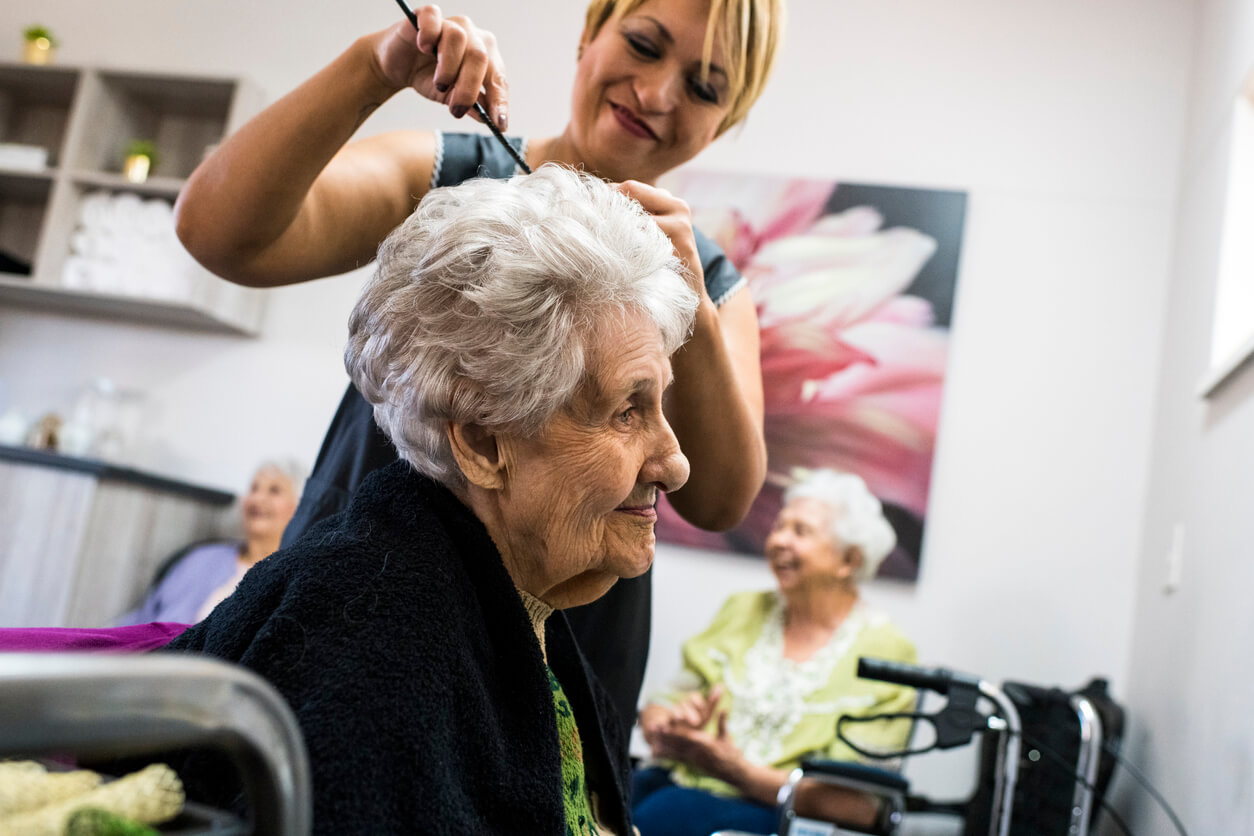
Gentle Hair Care Services
Hair services for dementia patients include:
- Haircuts: Gentle cuts adapted to the senior’s tolerance, often simpler styles that require minimal daily maintenance
- Shampooing: Using portable systems with careful water temperature control
- Conditioning: Treatments for dry or brittle hair common in elderly clients
- Colour services: When appropriate and tolerated, maintaining the senior’s preferred appearance
- Perms: For clients who tolerate longer appointments and have had perms throughout their lives
For seniors who become anxious during haircuts, groomers may work in short sessions over multiple visits, gradually building comfort and trust.
Foot Care for Dementia Patients
Foot care is especially important for dementia patients, who may not communicate foot pain or notice developing problems. Professional podology services include:
- Toenail trimming: Safe, proper nail care that seniors can no longer manage themselves
- Callus and corn care: Removing painful buildups that affect mobility
- Foot assessment: Checking for sores, infections, or circulation problems the senior cannot report
- Moisturizing: Preventing dry, cracked skin that can lead to complications
Why Grooming Matters for Seniors with Dementia
Some families wonder whether grooming is worth the potential stress for their loved one. In most cases, the benefits far outweigh the temporary discomfort—when services are provided by trained professionals.
Preserving Dignity and Identity
Personal appearance has been part of your loved one’s identity for their entire life. Maintaining their preferred hairstyle, keeping nails tidy, and ensuring overall grooming helps preserve their sense of self. Family members often report that a freshly groomed loved one seems more “like themselves,” which benefits everyone emotionally.
Physical Health Benefits
Regular grooming isn’t just cosmetic—it’s essential for health. Untrimmed toenails can curl into the skin, causing painful infections. Overgrown nails affect balance and walking. Neglected scalp and skin conditions can worsen. Regular professional grooming catches potential problems early and maintains physical comfort.
Positive Social Interaction
For seniors with dementia, especially those living at home with limited social contact, grooming appointments provide valuable human interaction. The gentle touch, conversation, and focused attention from a caring professional offers meaningful connection that benefits emotional well-being.
Tips for Families Arranging Dementia Grooming Services
As a caregiver, you can help ensure successful grooming appointments for your loved one.
Share Important Information with the Groomer
Before the first appointment, provide details about your loved one:
- Stage and type of dementia
- Triggers that cause distress (certain sounds, being touched unexpectedly)
- Calming strategies that work (favourite music, topics they enjoy discussing)
- Best time of day when they’re most alert and cooperative
- Their history with grooming (longtime hairstyle, preferences)
- Any health conditions affecting grooming (diabetes, skin sensitivities)
Schedule Appointments Strategically
Most dementia patients have better times of day—often mid-morning after breakfast but before fatigue sets in. Schedule grooming appointments during these windows. Avoid times when your loved one is typically tired, hungry, or more confused (late afternoon “sundowning” is common).
Be Present or Nearby
Your presence can be reassuring, especially during initial appointments. You don’t need to hover—sometimes that increases anxiety—but being nearby and occasionally offering familiar encouragement helps. As your loved one becomes comfortable with their groomer, you may be able to step away.
Expect Variability
Some appointments will go smoothly; others won’t. Dementia is unpredictable, and your loved one’s tolerance varies day to day. A skilled groomer understands this and won’t take it personally—and neither should you. The goal is always your loved one’s comfort and dignity, even if that means stopping early.
Choosing Dementia Grooming Services in Paris, Ontario
When selecting a mobile grooming provider for a loved one with dementia, look for:
- Dementia training: Specific education in caring for clients with cognitive impairment
- Experience: Track record working with dementia patients
- Patience and flexibility: Willingness to adapt to your loved one’s needs
- Consistent scheduling: Ability to provide the same caregiver each visit
- Background screening: Police vulnerable sector checks for safety
- Communication: Willingness to listen to your insights about your loved one
- Compassion: Genuine care for clients, not just technical skills
Book Dementia Grooming Services in Paris, Ontario
Your loved one with dementia deserves to look and feel their best, even as they navigate the challenges of cognitive decline. Specialized dementia grooming services in Paris, Ontario make this possible—bringing gentle, professional hair and foot care to seniors in the comfort of their own homes.
With trained professionals who understand dementia’s unique challenges, grooming appointments become positive experiences rather than sources of stress. The familiar environment, consistent caregivers, and patient approach help seniors maintain dignity and comfort throughout their journey.
If you’re caring for a loved one with dementia in Paris or the surrounding Brant County area, contact Senior Necessities today to learn more about our dementia-friendly grooming services. Our compassionate team specializes in caring for seniors with memory challenges, bringing patience, expertise, and genuine kindness to every appointment.
Recent Comments